Dying Declaration Need Not Be Corroborated as an Absolute Rule: Tripura HC Upholds Life Sentence in Pregnant Woman’s Burning Death
Gist of the Case
The Tripura High Court has upheld the conviction and life imprisonment of Parul Barman for the murder of her pregnant daughter-in-law, Iti Saha. The Division Bench held that a reliable dying declaration can form the basis of a conviction even when it is not independently corroborated by other evidence. The Court found the oral and written dying declarations in the case consistent and trustworthy and dismissed the appeal against the conviction.
Facts of the Case
Iti Saha was married to Dhananjoy Barman in 2011. According to the prosecution, she was subjected to harassment and monetary demands by members of her matrimonial family after her marriage. On May 21, 2015, when Iti was around nine months pregnant, she suffered extensive burn injuries at her matrimonial home. She later died from the injuries. The prosecution alleged that her mother-in-law, Parul Barman, tied a cloth around Iti’s mouth, poured kerosene over her and set her on fire. Parul Barman was prosecuted under Sections 498-A and 302 of the Indian Penal Code. The Sessions Court ultimately convicted her under Section 302 IPC and sentenced her to life imprisonment along with a fine of Rupees 50,000.
Arguments
The criminal appeal before the High Court challenged the conviction and sentence imposed by the Sessions Court. The case essentially turned on the reliability and evidentiary value of the statements attributed to the deceased.
The High Court examined the written dying declaration as well as the oral dying declarations relied upon by the prosecution. The Court noted that the deceased had been certified to be in a fit state of mind when her written statement was recorded.
The Court also considered the evidence of relatives of the deceased. It rejected the proposition that their evidence should be discarded merely because they were related to the victim, particularly when the alleged matrimonial offence had taken place within the matrimonial home.
Decision of the High Court
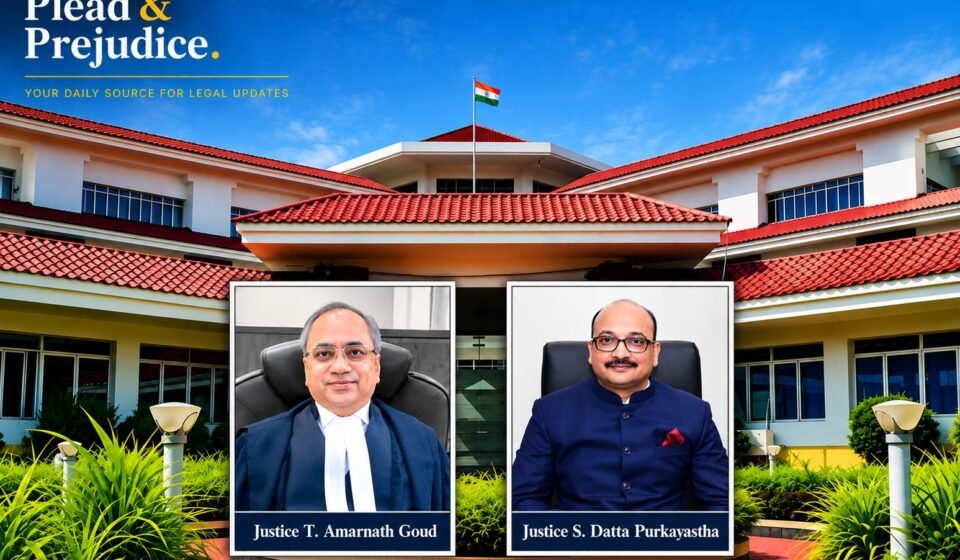
A Division Bench comprising Justice T. Amarnath Goud and Justice S. Datta Purkayastha found the oral and written dying declarations consistent and reliable. The Court held that the oral declarations also supported the written dying declaration. Importantly, the Court reiterated that there is no absolute requirement in law that a dying declaration must always be corroborated before a conviction can be recorded. Where the Court is satisfied that the dying declaration is reliable and trustworthy, a conviction can be based upon it even without independent corroboration. The Bench observed that it had no hesitation in relying upon the oral as well as written dying declarations in the case and held that an uncorroborated dying declaration can warrant conviction when it is found to be reliable.
After considering the evidence, the High Court concluded that the prosecution had established the case beyond reasonable doubt. The Court accordingly dismissed Crl.A(J) No. 26 of 2025, titled Smti. Parul Barman v. The State of Tripura, and upheld the conviction and life imprisonment imposed by the Sessions Court.