
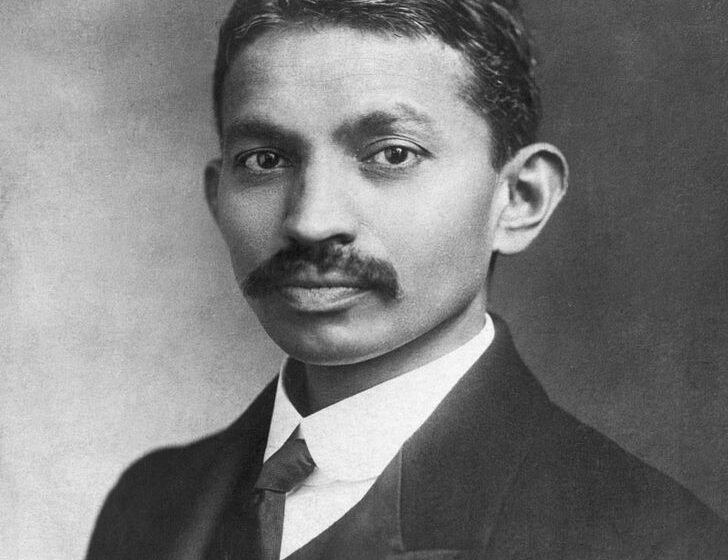
Mahatma Gandhi and His Legal Career
Mahatma Gandhi is remembered throughout the world as a leader of India’s freedom movement and as the principal advocate of non-violence and Satyagraha. However, before he became a political leader, Gandhi was trained as a barrister and spent many years working as a lawyer. His legal career, particularly in South Africa, had a profound influence on his understanding of truth, justice, negotiation and the role of a lawyer.
Gandhiji as a Barrister
Gandhi travelled to England in 1888 to study law. He joined the Inner Temple and was called to the Bar in 1891. After returning to India, he attempted to establish a legal practice in Bombay and later in Rajkot. His early practice was not particularly successful. He even experienced considerable nervousness when attempting to argue his first small case in Bombay.
His career changed in 1893 when Dada Abdulla, an Indian merchant from Natal, engaged him in connection with a substantial commercial dispute in South Africa. Gandhi travelled to South Africa primarily to assist Dada Abdulla and his legal team in that litigation.
The Dada Abdulla Case
The Dada Abdulla dispute was the most significant case of Gandhi’s early legal career and became the foundation of many of his later ideas about the legal profession.
The dispute arose out of business transactions between Dada Abdulla Jhaveri and his relative Tyeb Haji Khan Mahomed. Gandhi described the suit as involving approximately £40,000. The case was complicated, involving detailed accounts, promissory notes and a claim relating to the specific performance of an agreement concerning promissory notes. The defence alleged, among other things, that the promissory notes had been fraudulently obtained and lacked sufficient consideration. Both sides had engaged experienced attorneys and counsel.
Gandhi devoted considerable attention to studying the facts of the case. He came to realise that the evidence strongly supported his client’s position. At the same time, he recognised a serious practical problem: prolonged litigation could financially damage both parties, who were relatives and businessmen.
Instead of simply pursuing a lengthy court battle, Gandhi approached Tyeb Haji Khan Mahomed and proposed that the dispute be referred to arbitration. The proposal was eventually accepted.
The arbitrator decided in favour of Dada Abdulla and awarded approximately £37,000 along with costs. Gandhi, however, did not regard the arbitration award as the end of his responsibility. He persuaded Dada Abdulla to allow Tyeb Haji Khan Mahomed to pay the amount through reasonable instalments over a long period rather than demanding immediate payment that could have financially ruined him.
This experience had a lasting impact on Gandhi’s understanding of the legal profession. He concluded that the role of a lawyer was not merely to obtain victory for one party, but also to bring divided parties towards reconciliation and settlement. Gandhi later wrote that a large part of his twenty years of legal practice was devoted to bringing about private compromises in cases.
Gandhi’s Admission as an Advocate in Natal
Gandhi’s legal career in South Africa developed further after the Dada Abdulla matter.
On 3 September 1894, Gandhi was enrolled as an advocate of the Supreme Court of Natal. According to the chronology maintained by Mani Bhavan Gandhi Sangrahalaya, he was the first Indian admitted as an advocate there. His admission itself was significant because the Natal Law Society had opposed his application. Gandhi records that the objection was substantially connected with his being an Indian and therefore a person of colour. The matter ultimately came before the Supreme Court. The Court rejected the opposition and admitted Gandhi to the Bar, holding that the law did not authorise exclusion merely because of race or colour. Gandhi then took the oath before the Registrar.
This was an important legal episode in Gandhi’s own career because it placed him directly within the discriminatory racial environment that he would later challenge through constitutional, political and non-violent means.
The Gope Maharaj Case
Gandhi also appeared in actual court proceedings in South Africa. Mani Bhavan’s chronology records that on 19 September 1894 Gandhi handled his first case in South Africa, defending Gope Maharaj, and that Gandhi won the case.
Although this case is not remembered as a landmark reported judgment in the manner of many modern constitutional cases, it is important in establishing that Gandhi was not merely a lawyer by qualification. He actually appeared and practised as an advocate in South Africa.
Gandhi’s Legal Practice in Johannesburg
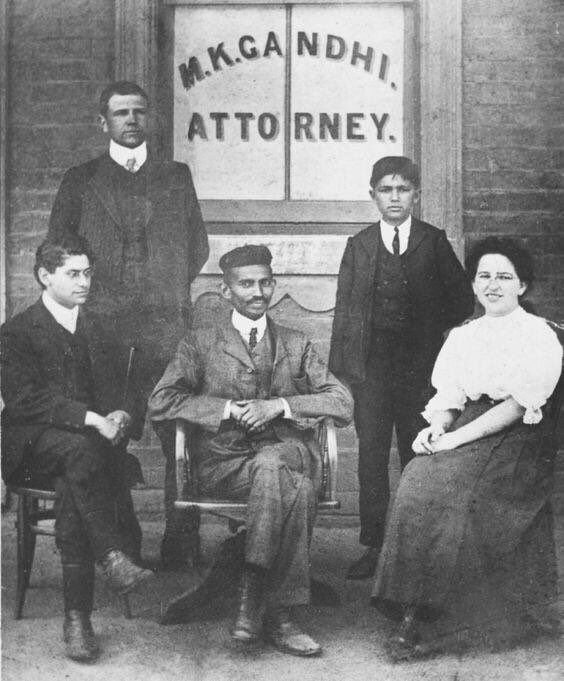
Gandhi later moved much of his professional activity to Johannesburg. The High Commission of India in Pretoria records that in 1903 he established his legal office on Rissik Street, close to the Government Courts in Johannesburg. He handled cases involving discrimination and racism against Indians, although his political and public work increasingly occupied much of his time.
Gandhi’s legal work during this period was closely connected with the problems faced by the Indian community. His legal practice therefore increasingly overlapped with public advocacy, petitions, negotiations and campaigns against discriminatory laws.
A Remarkable Incident Before a Magistrate
One of the most revealing incidents concerning Gandhi’s professional ethics occurred while he was practising in Johannesburg.
Gandhi later recalled that while conducting a case before a magistrate, he discovered that his own client had deceived him. When the client entered the witness box, Gandhi realised that the client’s case could not honestly be maintained. Instead of attempting to manipulate the evidence or continue arguing the case, Gandhi asked the magistrate to dismiss it. The opposing counsel was surprised, while the magistrate appreciated Gandhi’s conduct.
This incident provides an important insight into Gandhi’s approach to professional ethics. For him, the lawyer’s duty was not simply to win a case at any cost. Truth remained more important than the immediate success of his client.
Gandhi and the 1908 Anti-Asiatic Law Proceedings
Gandhi’s legal career eventually became directly connected with his political struggle against discriminatory legislation. On 10 January 1908, Gandhi appeared before a magistrate in Johannesburg after deliberately disobeying an order connected with the Transvaal’s anti-Asiatic legislation, popularly referred to as the “Black Act.” He accepted responsibility for organising resistance to the legislation and asked the court to impose the heaviest penalty available.
The magistrate instead sentenced him to two months’ simple imprisonment. Gandhi accepted the punishment. This became one of the early imprisonments arising from his campaign of non-violent resistance in South Africa. This episode demonstrates the transition in Gandhi’s career. The lawyer who had initially entered South Africa to work on a commercial dispute was now using legal knowledge and court proceedings in the broader struggle for the rights of the Indian community.
From Lawyer to Public Advocate
Gandhi’s legal career cannot be separated from his growing involvement in the political and social problems of Indians in South Africa. He helped establish the Natal Indian Congress in 1894 and later became involved in organisations representing Indians in the Transvaal. He prepared petitions and memoranda, corresponded with officials, represented Indian interests and provided legal assistance to members of the Indian community.
His legal practice therefore gradually developed into something broader than ordinary litigation. Law became one of the instruments through which Gandhi sought to challenge discriminatory treatment and secure recognition of the rights of Indians.
Gandhi’s Philosophy of Law
Gandhi’s experiences as a lawyer had a profound influence on his philosophy. The Dada Abdulla dispute taught him the importance of facts. He came to believe that a lawyer must first understand the facts honestly and completely before approaching the law. He also became deeply sceptical of litigation when it merely prolonged hostility and consumed the resources of both parties.
For Gandhi, therefore, settlement and reconciliation were not signs of weakness. They could be legitimate objectives of legal practice.
His experience also shaped his understanding of professional ethics. The incident in which he abandoned a case after discovering that his client had deceived him illustrates his insistence that a lawyer should not knowingly advance a false case.
The Legacy of Gandhi the Lawyer
Gandhi’s legal career lasted approximately two decades and was largely shaped by his experience in South Africa. His own writings show that the profession profoundly influenced his thinking about truth, facts, compromise, justice and reconciliation. The important legal episodes of his career include the Dada Abdulla commercial dispute, his admission as an advocate of the Supreme Court of Natal, the Gope Maharaj case, his legal practice in Johannesburg, his ethical conduct before a magistrate when he discovered that his client had deceived him, and his later appearances in proceedings arising from resistance to discriminatory legislation.
His journey is therefore significant not merely because Gandhi was a barrister, but because his experience of practising law helped shape the principles that later became central to his public life.
For Gandhi, the law was not merely a technical system of rules through which one side defeated another. His early legal experiences led him towards a conception of advocacy in which truth, justice, reconciliation and the peaceful resolution of disputes were important objectives.
In that sense, Gandhi’s transformation from a young and initially unsuccessful barrister into one of the world’s most influential advocates for civil rights began, in considerable measure, inside the legal profession itself.
Sources:
- Mahatma Gandhi, The Story of My Experiments with Truth — particularly his account of the preparation and conduct of the Dada Abdulla case. Gandhi’s Autobiography — The Dada Abdulla Case
- Mahatma Gandhi, The Law and the Lawyers — Gandhi’s detailed account of his legal practice and philosophy. The Law and the Lawyers — Mahatma Gandhi
- High Commission of India, Pretoria — Mahatma Gandhi in South Africa. Mahatma Gandhi in South Africa — High Commission of India
- Mani Bhavan Gandhi Sangrahalaya — Chronology of Gandhi in South Africa, including his admission as an advocate and the Gope Maharaj case. Gandhi in South Africa — Mani Bhavan
- E. S. Reddy, “Mahatma Gandhi, South Africa and Satyagraha” — historical account of Gandhi’s legal and political activities in South Africa. Mahatma Gandhi, South Africa and Satyagraha
- Mahatma Gandhi Website : https://m.mkgandhi.org/