Supreme Court Puts Tripura High Court’s Buyer-Friendly GST ITC Ruling on Hold
The dispute raises a larger question under the GST regime: should an honest purchaser lose Input Tax Credit because a supplier failed to deposit tax already collected?In a significant development for GST law, the Supreme Court has stayed the operation of a January 2026 judgment of the Tripura High Court which had protected a bona fide purchaser from denial of Input Tax Credit (ITC) merely because the supplier failed to deposit the GST collected from the purchaser with the Government.
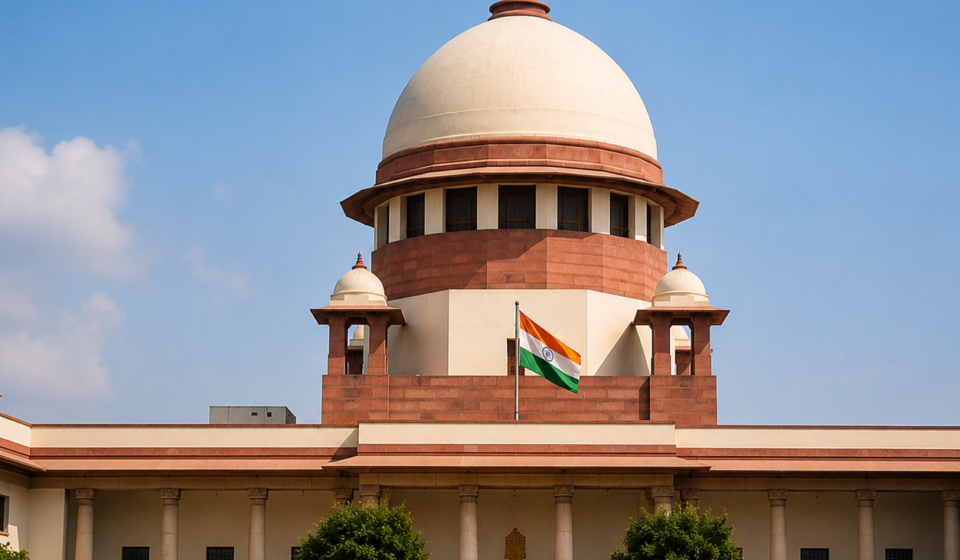
The Supreme Court issued notice in the Union of India’s challenge against the Tripura High Court’s decision in Union of India v. M/s Sahil Enterprises & Anr. and stayed the operation of the High Court judgment. The matter now places before the Supreme Court an important question concerning the allocation of responsibility between a purchasing dealer and a defaulting supplier under the GST framework.
What Had the Tripura High Court Decided?
The controversy arose after Sahil Enterprises, a trader dealing in rubber products, purchased goods from a supplier and paid the applicable GST as part of the transaction.The supplier reportedly reflected the sales in its GSTR-1 returns but subsequently failed to deposit the corresponding GST with the Government, filing NIL GSTR-3B returns.The GST authorities then turned to the purchaser and denied ITC of approximately ₹1.11 crore, along with consequential interest and penalty, on the ground that the condition contained in Section 16(2)(c) of the Central Goods and Services Tax Act, 2017 had not been fulfilled.Section 16(2)(c) makes actual payment of the tax charged on a supply to the Government one of the statutory conditions connected with entitlement to ITC.The purchaser’s case, however, was straightforward: it had paid the supplier, paid the GST charged on the transaction and had no practical mechanism to ensure that the supplier subsequently deposited that amount with the Government.
The High Court’s Concern: Can an Honest Buyer Control a Supplier’s Compliance?
The Tripura High Court accepted the constitutional validity of Section 16(2)(c), but adopted a restrictive interpretation of its application.The Court held that the provision should not be used to deny ITC to a purchaser involved in a bona fide transaction merely because the supplier subsequently failed to discharge its tax liability.According to the High Court, a distinction had to be drawn between genuine commercial transactions and transactions involving fraud, collusion or an attempt to defraud the revenue.The Court consequently set aside the demand against Sahil Enterprises and directed that ITC of ₹1,11,60,830 be allowed.Supreme Court Stay Changes the Immediate PositionThe Union Government challenged the Tripura High Court’s interpretation before the Supreme Court.A Bench comprising Justice J.B. Pardiwala and Justice K. Vinod Chandran has now issued notice and stayed the operation of the High Court’s January 6, 2026 judgment.The stay means that the protection formulated by the Tripura High Court cannot presently be treated as an operative precedent while the Supreme Court considers the Union’s challenge.The Bigger GST QuestionThe litigation goes beyond the facts of one taxpayer.At the centre of the dispute is a recurring problem under GST: who should bear the consequences
when tax is paid by a purchaser to a supplier, but the supplier does not deposit that tax with the Government?The Tripura High Court had approached the issue from the perspective of the purchaser’s practical inability to supervise a supplier’s subsequent compliance.The revenue’s position, however, is rooted in the statutory structure of Section 16(2)(c), which links ITC entitlement to actual payment of tax to the Government.The Supreme Court’s eventual decision could therefore have significant consequences for businesses across India, particularly those dealing with large supply chains and multiple vendors.Why This Case MattersThe outcome may determine whether a purchaser who has acted in good faith can be required to reverse ITC solely because of a supplier’s later tax default.It could also clarify:- the scope of Section 16(2)(c) of the CGST Act;- the level of due diligence expected from purchasing dealers;- whether bona fide purchasers deserve protection against supplier defaults;- and the extent to which ITC can depend on conduct entirely outside the purchaser’s control.For now, the Supreme Court’s stay has reopened a legal issue that is likely to have substantial implications for taxpayers, GST administrators and businesses across the country.The case is one to watch closely, particularly because the Supreme Court’s eventual ruling may define the limits of a purchaser’s responsibility for a supplier’s failure to deposit GST.
Case DetailsCase: Union of India v. M/s Sahil Enterprises & Anr.Supreme Court Case No.: D. No. 33460/2026Impugned Tripura High Court Case: Sahil Enterprises v. Union of India & Ors., WP(C) No. 688 of 2022Tripura High Court Judgment: January 6, 2026